The first half of FY2026 produced the lowest timber sale volumes in Western Washington in 22 years, with only 114,391 MBF (thousand board feet) sold, just 25% of the annual goal of 459,000 MBF. This historic shortfall follows Commissioner Upthegrove’s pause of older forest timber sales and his announcement to remove an additional 77,000 acres from the harvestable land base. Current Q3 projections indicate the underperformance will continue, with only 34% of Q3 planned quarterly volume scheduled for January and February auctions.
Background: The MMLTCS Agreement
December 2025 marked the end of the first half of fiscal year 2026 for the Washington State Department of Natural Resources timber sale program. Since December 2019, when DNR adopted the Marbled Murrelet Long-Term Conservation Strategy (MMLTCS) as an amendment to the 1997 Habitat Conservation Plan (HCP), strong opposition has targeted the sale of timber that was released for harvest under the terms of the agreement. This agreement between DNR and the United States Fish and Wildlife Service (USFWS) took nearly 20 years to complete, during which tens of thousands of acres of timberland remained in limbo. The plan was intended to provide for ‘Long-term certainty for timber harvest.’
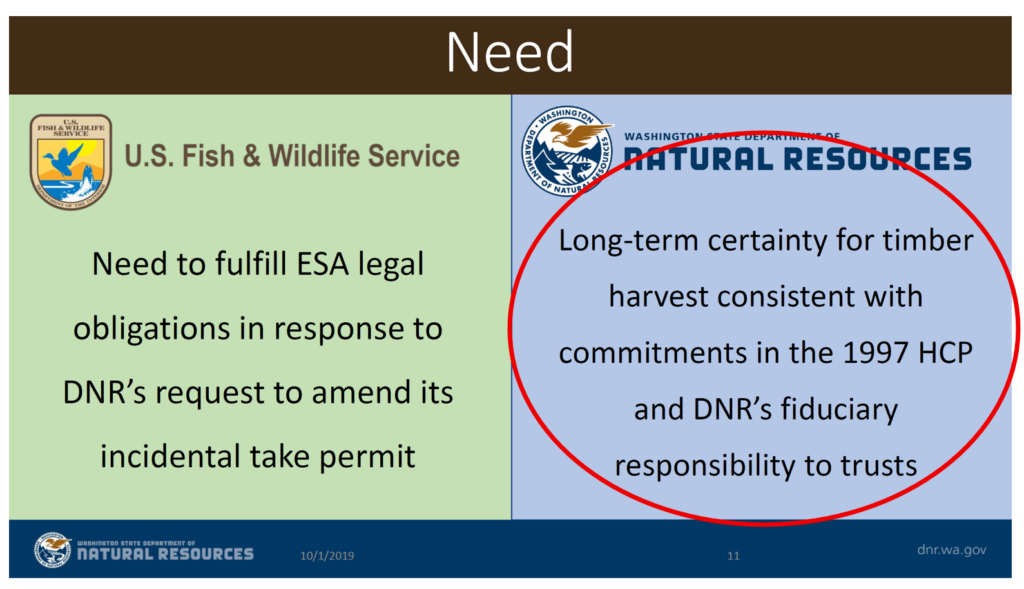
Figure 1-DNR Presentation 10/1/2019
The 2019 agreement established 604,907 acres of ‘Long Term Forest Cover’ in Western Washington (DNR 10/1/2019), the majority preserved from active management. This includes 168,000 acres of habitat, along with several thousand additional non-habitat acres in buffers and Special Habitat Areas. It is expected these acres will grow to a total of 272,000 acres, an increase of 32%, over the remaining life of the HCP (DNR 10/1/2019). However, the plan released 39,000 acres of habitat for active management – acres that USFWS deemed unnecessary for preservation to meet Endangered Species Act (ESA) and HCP goals. Ultimately, this led to the issue that DNR and the beneficiaries face today: opposition and legal actions aimed at stopping timber sales.
Current Status: FY2026 Performance
Opposition to harvesting these older forests has resulted in record-low volumes brought to auction over recent fiscal years. When Commissioner of Public Lands Dave Upthegrove took office in January 2025, he placed a “pause” on sales of these older, controversial timber stands. He also announced plans to remove an additional 77,000 acres of legally operable timber stands from the harvestable land base. This leaves DNR with approximately 48 percent of Western Washington forested trust lands available for harvest to generate trust beneficiary revenue. Under Commissioner Upthegrove, Western Washington’s Q4 FY2025 marked the worst quarter in21 years of the DNR timber program, followed by the worst Q1 FY2026 in 22 years (see Fig. 2).
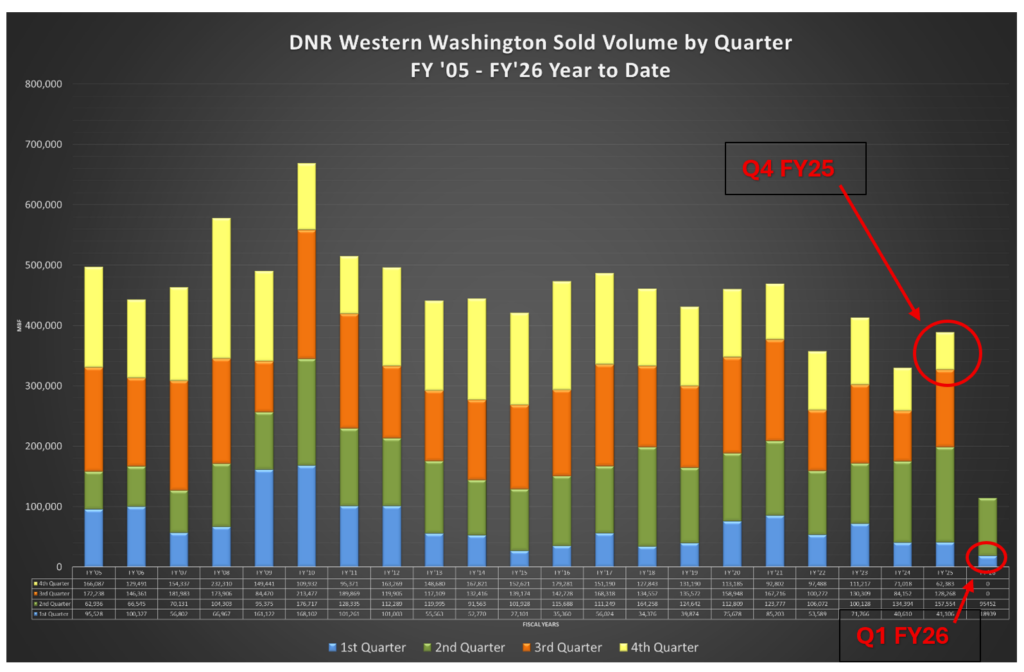
Figure 2 – DNR Sold Volume by Quarter by Fiscal Year FY05 to FY26 YTD. Data sourced from DNR auction reports.
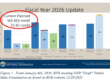
While Q2 FY2026 is not DNR’s worst volume performance, it ranks sixth-worst over the past 22 years. Despite the dedicated work of DNR’s professional field staff—foresters, engineers, biologists, and geologists—the Commissioner’s pause has resulted in only 114,391 MBF (Thousand Board Feet) sold in Western Washington during the first half of FY2026, a new record low. This is far from the long-term certainty promised to trust beneficiaries (Schools, counties, and other public institutions) and their customers. At the fiscal year’s midpoint, DNR has reached only 25 percent of its FY2026 Western Washington volume target of 459,000 MBF, as shown in the January 2026 Board of Natural Resources (BNR) Timber Sales presentation (see Fig. 3). During the Timber Sales presentation to the BNR, DNR staff typically include a chart showing the planned and achieved volume sold at auction.
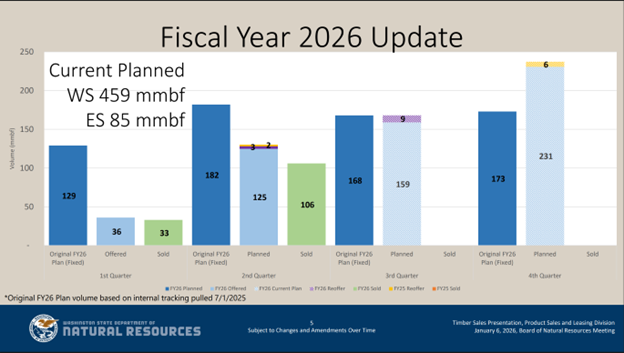
Figure 3 – From January 6th, 2026, BNR meeting DNR “Draft” Timber Sales Presentation as found on BNR website 12/29/2025
Q3 Outlook: Projected Shortfalls
While the chart above appears promising for the second half of FY2026, proposed timber sales tell a different story. The January 2026 auction will bring 27,311 MBF to market, all in Western Washington. The proposed sales for the February auction total 25,227 MBF, with only 22,938 in Western Washington.
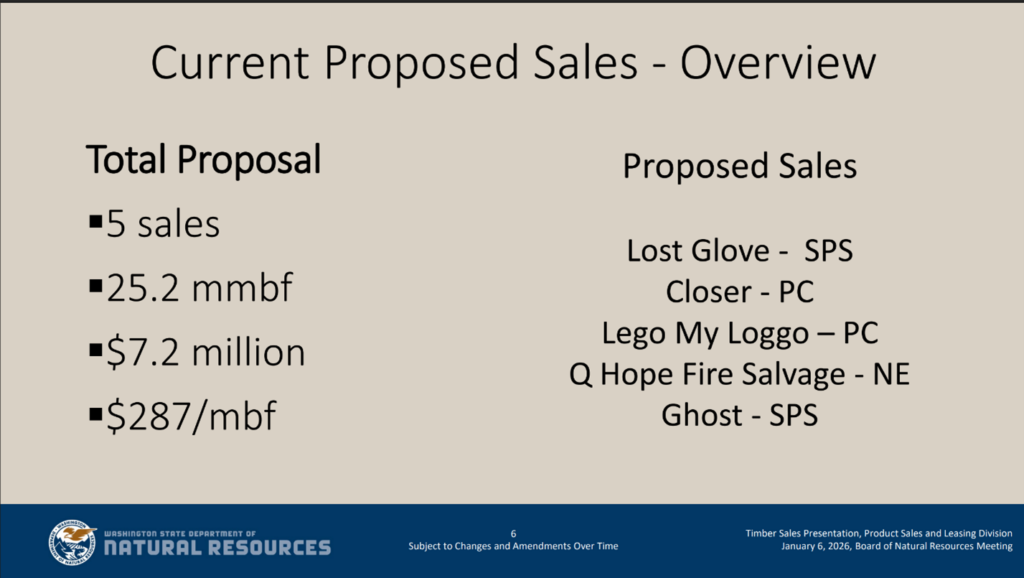
Figure 4 – From January 6th, 2026, BNR meeting DNR “Draft” Timber Sales Presentation as found on BNR website 1/5/2026 – February proposed Board Sales.
Including Eastern Washington’s 2,289 MBF fire salvage sale, DNR’s current proposed Q3 volume totals 57,023 MBF of the planned 168,000 MBF—only 34 percent of the quarterly target. This leaves 56 percent of Q3’s scheduled volume—nearly 111,000 MBF—intended for the March auction.
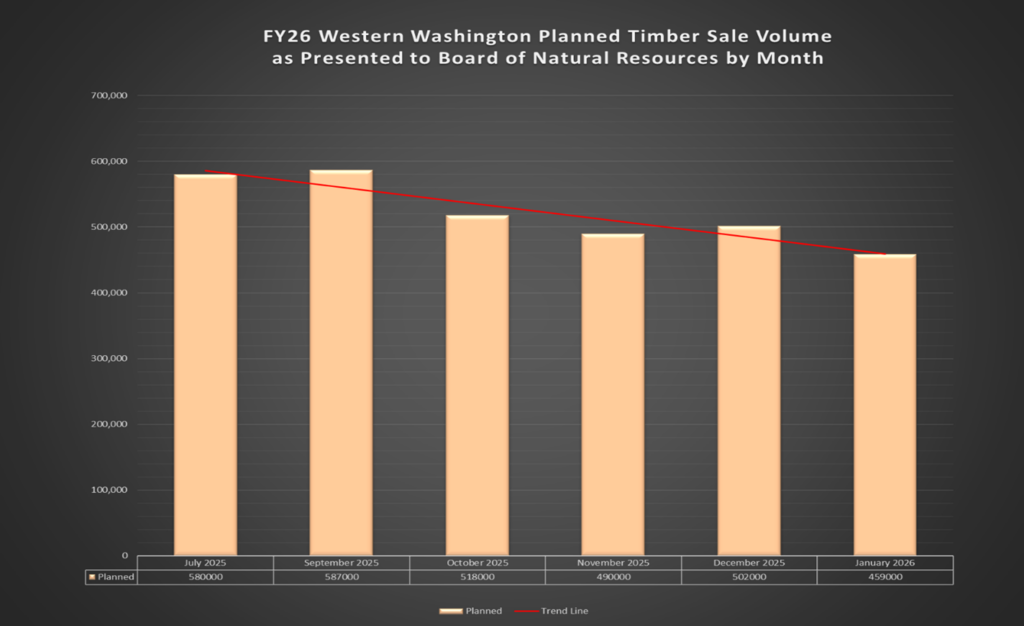
Figure 5 – Western Washington Planned Auction Volume for FY2026 as presented to the Board of Natural Resources
Historical Context and Trends
The chart above tracks FY2026 planned auction volumes from timber sales presentations delivered at recent BNR meetings. The red line represents a simple linear trend line in the data. This chart is similar to the FY 2025 chart developed from DNR data presented to the Board. These trends mirror those observed in FY2023 and FY2024, and the remainder of FY2026 is expected to continue this pattern. This raises the ongoing question: When will the ‘long-term certainty of timber harvest’ and DNR’s fiduciary responsibility to trusts be realized?
Volume is the measurement beneficiaries and timber purchasers use to track DNR’s performance, but another critical metric is cash flow. DNR is a cash business, meaning it relies on payments from the sale of valuable materials at auction to cover the management costs of the trust lands. And beneficiaries rely on revenue from trust land management to provide a variety of services. Watching the management fund balances DNR maintains will be critical going forward. The volume sold in Q3 and Q4 of this year may foreshadow financial challenges for both DNR and the beneficiaries.